Quick Summary
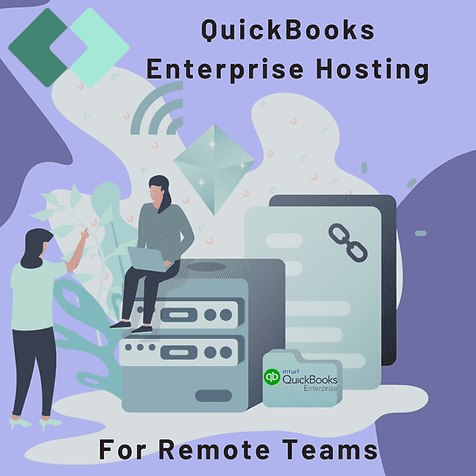
QuickBooks Enterprise hosting helps accounting firms support remote teams by providing secure access to a centralized cloud environment where users can work with the same company files, applications, and workflows from different locations. Instead of managing office servers, VPN connections, and separate installations, firms can use a managed hosting environment designed for collaboration, performance, and business continuity.
- Remote teams can access QuickBooks Enterprise from anywhere: Hosted QuickBooks Enterprise allows authorized users to work with the same accounting data without being limited to a physical office location.
- Centralized access improves collaboration: Multiple accountants, partners, and seasonal employees can work within the same hosted environment while maintaining consistent files, applications, and workflows.
- Hosting reduces IT management responsibilities: Managed hosting helps firms avoid handling server maintenance, software updates, infrastructure management, and complex remote access setups internally.
- Security and backup planning are critical: Accounting firms should evaluate access controls, authentication, monitoring, encryption, and backup strategies when selecting a QuickBooks hosting environment.
- A successful migration requires workflow planning: Firms should review users, connected applications, performance requirements, and business processes before moving QuickBooks Enterprise to the cloud.
Introduction
Remote work has changed how accounting firms operate. Today, partners may review reports from home, accountants may work from different locations, seasonal employees may join during tax deadlines, and teams may need access to the same QuickBooks Enterprise files without being physically connected to an office server.
For firms using QuickBooks Enterprise, the challenge is not simply providing remote access. The real challenge is maintaining a reliable environment where multiple users can collaborate securely, access the same financial data, and continue working without interruptions.
QuickBooks Enterprise hosting allows accounting firms to run their licensed QuickBooks environment on managed cloud infrastructure, giving authorized users secure remote access to applications and company files while maintaining a centralized workflow.
Unlike traditional setups where firms depend on office servers, VPN connections, or individual computers, hosted QuickBooks Enterprise provides a managed environment designed around accessibility, collaboration, security, and operational continuity.
Why Remote Accounting Teams Struggle With Traditional QuickBooks Setups
Many accounting firms started with QuickBooks running on a desktop computer or an office server.
Initially, this setup may work well when:
- All employees work from one location
- The number of users is small
- Files are accessed locally
- IT requirements are limited
However, as firms grow, limitations become noticeable.
Remote teams often experience challenges such as:
- Difficulty accessing QuickBooks files outside the office
- VPN connection issues
- Slow performance when multiple users connect remotely
- Version differences between computers
- File-sharing conflicts
- Increased IT support requirements
For accounting firms, these problems become more serious because QuickBooks Enterprise often contains important financial records, client information, reporting data, and business-critical workflows. A remote employee should not need to troubleshoot office hardware just to complete accounting tasks.
What Is QuickBooks Enterprise Hosting?
QuickBooks Enterprise hosting means running the licensed QuickBooks Enterprise software and company files on professionally managed cloud servers instead of maintaining the infrastructure inside the office.
Users connect securely to the hosted environment and access:
- QuickBooks Enterprise
- Company files
- Connected applications
- Accounting tools
- Shared resources
The software experience remains familiar because employees continue using the same QuickBooks interface and workflow.
The main difference is where the application and data are hosted.
Traditional setup:
Employee Computer
        |
Office Server
        |
QuickBooks Files
Hosted setup:
Remote Users
        |
Secure Connection
        |
Managed Cloud Server
        |
QuickBooks Enterprise + Applications
This model allows authorized users to work from different locations while accessing a centralized environment. QuickBooks hosting documentation also highlights that hosted environments allow users to access company files remotely while maintaining shared access to the same information.
How QuickBooks Enterprise Hosting Helps Remote Accounting Teams
1. Access QuickBooks From Anywhere Without Changing Workflows
One of the biggest advantages of hosting QuickBooks Enterprise is allowing employees to work remotely without changing the software they already know.
Accountants can access their familiar QuickBooks environment from:
- Home offices
- Branch locations
- Client sites
- Temporary work locations
This is especially useful for firms that support:
- Hybrid teams
- Remote accountants
- Seasonal tax professionals
- Multiple office locations
Instead of transferring files or creating duplicate setups, everyone works from the same hosted environment.
2. Improve Collaboration Between Multiple Users
Accounting firms rarely have only one person working inside QuickBooks Enterprise.
Different team members may need access for:
- Transaction entry
- Reporting
- Review processes
- Client accounting
- Financial analysis
A hosted environment allows authorized users to access the same system while maintaining appropriate permissions.
This improves collaboration because:
- Everyone works with current information
- Teams avoid duplicate files
- Managers can review work remotely
- Employees do not need physical office access
For growing firms, this centralized approach is often more practical than expanding local infrastructure.
3. Support Remote Teams During Tax Season
Tax season creates unique technology challenges for accounting firms.
During peak periods:
- More users require access
- Workloads increase
- Deadlines become critical
- Downtime becomes more costly
A hosting environment should be designed for peak demand, not average usage.
Firms should consider:
- Server resources
- User capacity
- Application performance
- Backup reliability
- Technical support availability
The right hosting setup helps firms maintain productivity when workload pressure is highest.
4. Reduce IT Management Responsibilities
Maintaining an internal QuickBooks environment requires ongoing attention.
Firms may need to manage:
- Server maintenance
- Software updates
- Security controls
- Backups
- User access
- Hardware issues
For many accounting firms, managing infrastructure is not their core business. A managed hosting provider takes responsibility for the underlying environment so firms can focus more on client service.
QuickBooks Enterprise Hosting vs Office Server Setup
| Factor | Office Server | Hosted QuickBooks Enterprise |
|---|---|---|
| Remote access | Requires additional configuration | Designed for remote access |
| Hardware | Firm purchases and maintains | Provider manages infrastructure |
| Scaling | Limited by hardware | Easier resource adjustment |
| Backup responsibility | Internal process | Managed backup options |
| Support | Internal IT/vendor coordination | Hosting support team |
| Accessibility | Office dependent | Location flexible |
What Accounting Firms Should Evaluate Before Moving QuickBooks Enterprise to Hosting
Moving QuickBooks Enterprise to the cloud requires planning.
User Requirements
Evaluate:
- Number of users
- Remote access needs
- Permission levels
- Department requirements
Application Compatibility
Many firms use QuickBooks alongside:
- Tax applications
- Reporting tools
- Document management systems
- Microsoft applications
Before migration, review whether connected applications can operate properly in the hosted environment.
Security Requirements
Financial data requires strong protection.
Firms should evaluate:
- User authentication
- Access controls
- Encryption
- Monitoring
- Backup strategy
Performance Requirements
QuickBooks Enterprise performance depends on:
- Server resources
- Storage performance
- User activity
- Application workload
A properly sized environment helps maintain consistent performance.
Common Mistakes Firms Make When Moving QuickBooks Enterprise for Remote Teams
Moving QuickBooks Enterprise to a hosted environment can help accounting firms improve accessibility, collaboration, and workflow efficiency. However, the success of the migration depends on how well the hosting environment matches the firm’s actual operational requirements.
Many firms focus only on gaining remote access and overlook important factors such as user workflows, application dependencies, security requirements, and migration planning. A successful QuickBooks Enterprise hosting strategy requires understanding how the firm works today and designing an environment that supports future growth.
Choosing a Hosting Environment Without Understanding Workflow Requirements
One of the biggest mistakes accounting firms make is selecting a hosting environment before understanding how their team actually uses QuickBooks Enterprise and connected applications.
Every firm has different workflows. A small accounting team with a few users may have simple requirements, while a growing CPA firm may need multiple employees, tax applications, reporting tools, document management systems, and client workflows operating together.
A hosting environment should be designed around the firm’s daily operations, not just the software installation.
Before moving QuickBooks Enterprise, firms should evaluate:
- Which employees need access to QuickBooks Enterprise and related applications
- Which departments require different permission levels
- How accountants, managers, and partners collaborate on client files
- Which third-party applications connect with QuickBooks
- How workflows change during high-demand periods such as tax season
A proper assessment helps ensure users have the right access, applications work together correctly, and employees can continue their existing processes without unnecessary disruption.
Treating Hosting as Only a Remote Access Solution
Another common mistake is viewing QuickBooks Enterprise hosting only as a way to access software from outside the office.
Remote access is an important benefit, but it is only one part of a successful hosting strategy. A well-designed hosted environment should also support security, performance, data protection, application management, and future scalability. QuickBooks highlights cloud hosting benefits such as accessing shared data remotely, supporting multiple users, maintaining backups, and improving collaboration.
Accounting firms should consider the complete hosting environment, including:
- Security and access control: Ensuring only authorized users can access sensitive financial information through proper permissions and authentication methods.
- Backup and recovery planning: Protecting QuickBooks company files and related application data against accidental loss, hardware failures, or unexpected disruptions.
- Performance management: Ensuring the hosted environment has enough resources to support multiple users and demanding accounting workloads.
- Application support: Making sure connected applications, add-ons, and integrations continue working properly after migration.
- Scalability: Allowing the environment to support additional users, applications, and changing business requirements as the firm grows.
The goal of hosting should not simply be “access QuickBooks remotely.” The goal should be creating a reliable accounting technology environment that supports the entire firm.
Ignoring Migration Planning Before Moving Critical Accounting Data
QuickBooks Enterprise migration involves more than transferring company files to a new server. Accounting firms depend on accurate financial data, connected applications, and established workflows, so the migration process requires careful preparation.
Moving without proper planning can lead to issues such as:
- Missing application configurations
- User access problems
- Workflow interruptions
- Compatibility issues
- Unexpected downtime during transition
A structured migration process should include:
Environment Assessment
Before migration begins, firms should review their current setup, including:
- QuickBooks Enterprise version
- Number of users
- Existing integrations
- Current file locations
- Security requirements
- Performance expectations
This helps determine the right hosting architecture.
Data Transfer Planning
Financial data should be migrated carefully to ensure:
- Company files remain accurate
- Permissions are maintained
- Required applications are available
- Data integrity is verified
A detailed migration plan reduces the chances of operational disruption.
Application Testing
Before going live, firms should test:
- QuickBooks functionality
- Connected applications
- User access
- Printing and reporting workflows
- File permissions
Testing allows firms to identify and resolve issues before employees begin using the new environment.
User Validation and Go-Live Support
The final stage should include user testing and onboarding.
Employees should confirm that:
- They can access required applications
- Their workflows operate correctly
- Permissions are configured properly
- They understand the new access process
Post-migration support is equally important because users may require assistance while adapting to the hosted environment.
How OneUp Networks Helps CPA Firms Host QuickBooks Enterprise
Moving QuickBooks Enterprise to the cloud requires more than installing software on a remote server. CPA firms need a hosting environment that supports their users, applications, security requirements, and everyday accounting workflows.
OneUp Networks helps accounting firms create a managed QuickBooks Enterprise hosting environment designed around their operational needs. The process starts by understanding the firm’s current setup, applications, users, and workflow requirements before planning the right hosting approach.
The process includes:
- Reviewing your current QuickBooks Enterprise environment: Understanding your company files, users, connected applications, and technical requirements.
- Planning a smooth migration: Preparing the hosting environment, moving data, testing applications, and reducing workflow disruption.
- Configuring your hosted environment: Setting up QuickBooks Enterprise and compatible business applications in a managed cloud environment.
- Supporting your team after deployment: Helping users access applications, resolve technical issues, and maintain a reliable workflow.
Firms continue to own their licensed QuickBooks Enterprise software, while OneUp Networks manages the hosting infrastructure, security-focused environment, backups, and technical support required to run those applications effectively.
The goal is to give accounting teams a dependable environment where they can access QuickBooks Enterprise securely, collaborate from different locations, and spend less time managing IT infrastructure.
FAQs
Yes. QuickBooks Enterprise hosting allows authorized users to access the hosted environment remotely and work with centralized company files.
The software experience remains similar. The primary difference is that the application and data are hosted on managed cloud infrastructure instead of a local computer or office server.
Yes. Hosted environments are commonly designed for multi-user access with appropriate permissions.
Yes. CPA firms often use hosting to support remote teams, improve collaboration, and reduce infrastructure management.
Migration timelines depend on the number of users, applications, company files, and environment requirements. A proper assessment helps determine the right migration approach.
Final Thoughts
Remote accounting is no longer limited by office location. However, supporting a distributed team requires more than simply allowing employees to access QuickBooks from home. QuickBooks Enterprise hosting provides accounting firms with a centralized environment where teams can collaborate, access financial data, and maintain consistent workflows from different locations.
The key is choosing a hosting approach that considers the entire accounting operation — users, applications, security, performance, and future growth.
Help Your Remote Accounting Team Work Better With QuickBooks Enterprise Hosting
OneUp Networks helps CPA firms securely host QuickBooks Enterprise and business-critical applications in a managed cloud environment built around their workflow.
- Book a Demo – Experience a hosted QuickBooks Enterprise environment designed for accounting teams.
- Get a Custom Quote – Receive a hosting recommendation based on your users, applications, and workflow requirements.
- Talk to a Cloud Hosting Expert – Discuss your current setup and migration options with a specialist.