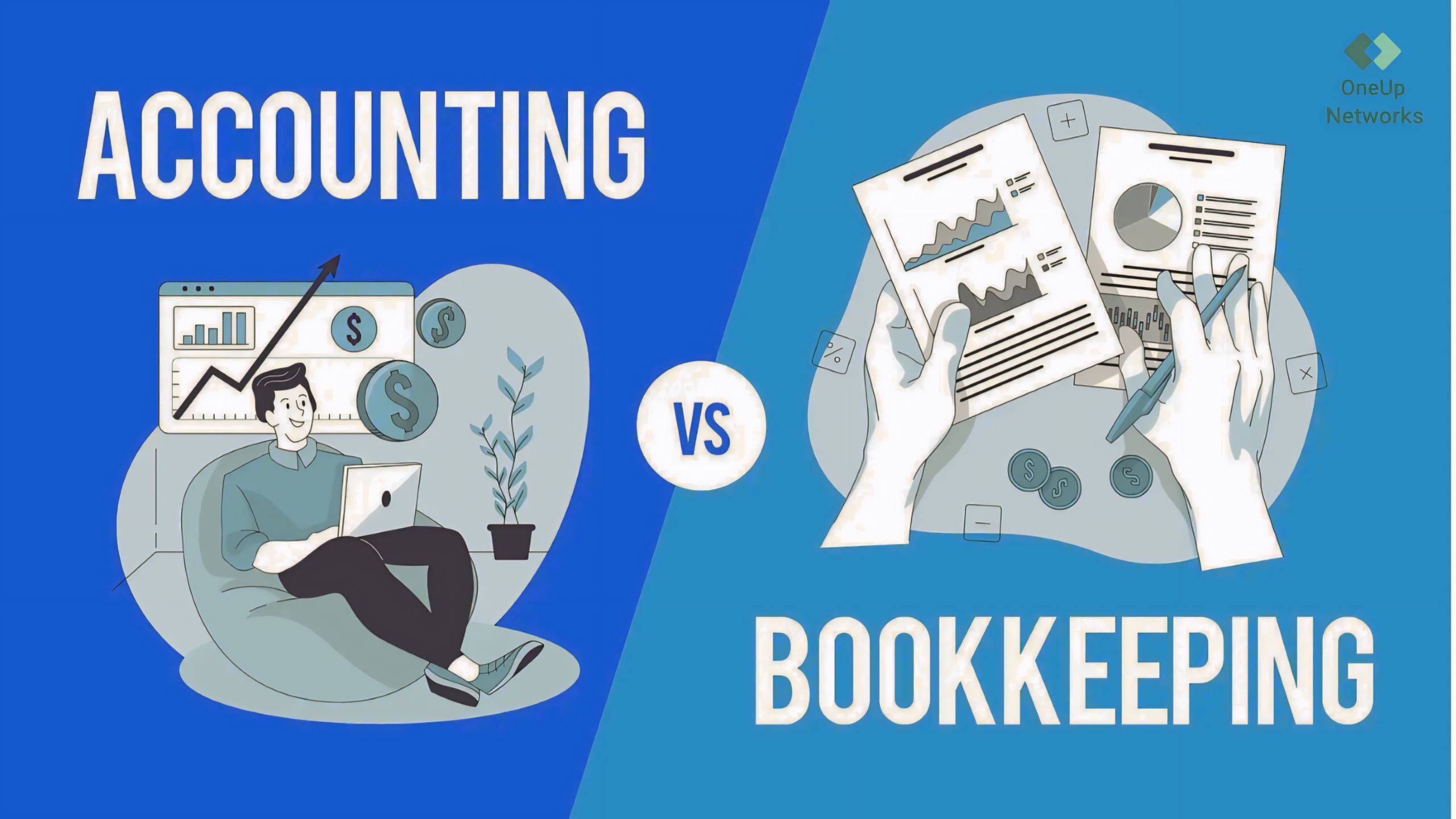
In the fast-paced world of business finance, the distinction between a bookkeeper and an accountant is often blurred. Yet, these roles—while complementary—serve different purposes and require different skill sets. Understanding these differences is critical for business owners aiming to make informed decisions about staffing, outsourcing, or improving financial workflows. Furthermore, with the rise of cloud-based accounting software and digital transformation, the roles are evolving, making clarity even more essential. This guide breaks down the responsibilities, qualifications, and strategic functions of bookkeepers vs accountants—supported by real-world examples, industry insights, and actionable advice for financial management.
Table of contents
What Is a Bookkeeper?
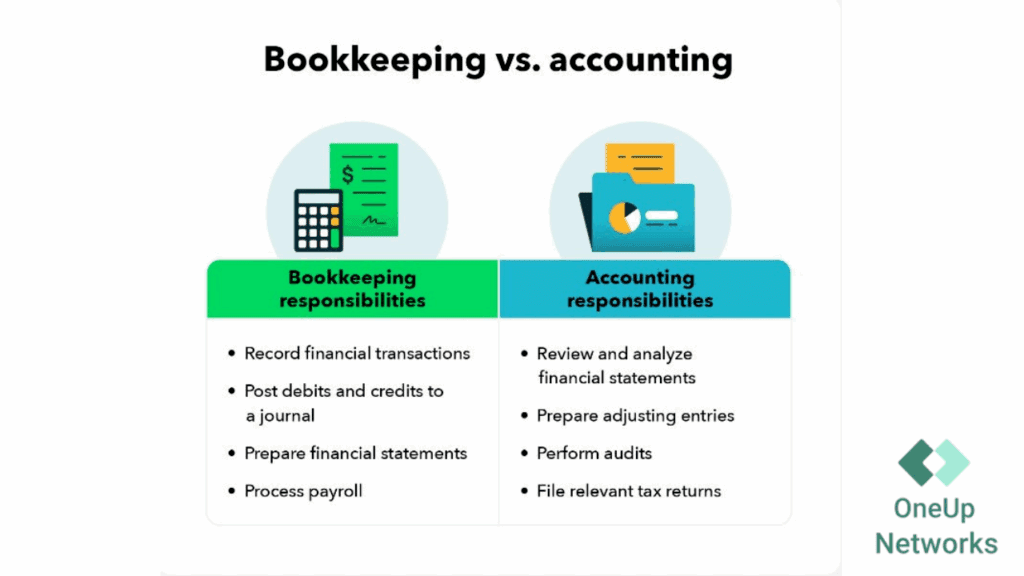
A bookkeeper is primarily responsible for recording and organizing a business’s day-to-day financial transactions. Their work lays the foundation for all financial reporting and analysis.
Key Responsibilities
- Recording transactions: Entering sales, purchases, payments, and receipts into the general ledger.
- Reconciling accounts: Ensuring transactions match bank and credit card statements.
- Managing accounts payable and receivable: Tracking incoming and outgoing funds.
- Processing payroll: Calculating wages and issuing paychecks.
- Generating basic reports: Producing profit and loss statements, balance sheets, and cash flow summaries.
- Maintaining ledgers: Keeping master records accurate and up to date.
Example:
A bookkeeper at a small retail store logs daily transactions in QuickBooks Hosting, reconciles weekly bank statements, and compiles monthly financial summaries for the owner.
What Is an Accountant?
An accountant takes the data compiled by bookkeepers and analyzes, interprets, and reports on it. Accountants provide strategic financial advice, ensure regulatory compliance, and help business owners make informed decisions.
Key Responsibilities
- Financial reporting: Preparing and interpreting financial statements.
- Tax planning and filing: Handling returns and optimizing tax strategy.
- Audit and compliance: Reviewing records for regulatory adherence.
- Strategic advice: Recommending ways to reduce costs and increase profit.
- Budgeting and forecasting: Projecting future financial performance.
Example:
An accountant reviews the annual books of a manufacturing company, files the corporate tax return, and provides insights into reducing production overhead for the next fiscal year.
Bookkeeper vs Accountant : Comparison
| Feature/Responsibility | Bookkeeper | Accountant |
|---|---|---|
| Main Focus | Recording transactions | Analyzing and interpreting data |
| Qualifications | No formal certification required | Often certified (e.g., CPA) |
| Typical Tasks | Data entry, reconciliations | Financial reporting, tax preparation |
| Software Used | QuickBooks, Xero, FreshBooks | QuickBooks, Sage, ERP systems |
| Regulatory Compliance | Limited | Extensive |
| Strategic Advice | Rarely | Frequently |
| Audit Preparation | Supports | Leads |
| Payroll Management | Often | Sometimes |
| Tax Filing | No | Yes |
| Salary Range (USA, 2025 avg.) | $45,000–$55,000 | $65,000–$85,000+ |
Key Differences Explained
1. Scope of Work
Bookkeepers ensure financial data is recorded correctly and organized logically. In addition, they provide the backbone for accurate financial tracking. Accountants, on the other hand, use that data to provide deeper analysis and insights, ultimately shaping business strategy.
2. Education & Certification
Bookkeepers may have certificates or on-the-job training, while accountants often hold degrees and credentials like CPA (Certified Public Accountant) or CMA (Certified Management Accountant). As a result, accountants are qualified to handle more complex financial matters.
3. Business Impact
Bookkeepers help businesses stay organized and operational. Consequently, accountants offer strategic guidance that influences growth, tax efficiency, and compliance—making them invaluable as your business scales.
4. Tools and Software
Both roles use accounting software, but accountants typically leverage more advanced tools for forecasting, audits, and analysis. Furthermore, cloud-based solutions like QuickBooks Online and Xero are transforming how both bookkeepers and accountants work, enabling real-time collaboration and remote access.
When to Use a Bookkeeper or Accountant
- Startups & Small Businesses: Bookkeepers help manage everyday financial transactions, ensuring smooth operations from the start.
- Growing Businesses: As complexity increases, accountants become essential for tax planning, compliance, and strategic insights.
- Tax Season: Accountants are indispensable for accurate filing and tax strategy, minimizing liability and maximizing returns.
- Audits & Financial Planning: Accountants support audits and long-term planning, providing peace of mind and future-focused advice.
Example:
A boutique clothing store employs a bookkeeper for day-to-day operations. At year-end, an accountant steps in to prepare taxes and advise on inventory and cash flow improvements.
Industry Trends and Statistics
- Employment Outlook: According to the U.S. Bureau of Labor Statistics, jobs for accountants and auditors are projected to grow 4% from 2022 to 2032. Bookkeeping roles may decline slightly due to automation.
- Software Usage: Over 70% of small U.S. businesses use both bookkeepers and accountants, with cloud-based tools like QuickBooks and Xero playing a central role.
Latest Update: Why This Decision Matters More Than Ever
As accounting roles continue to evolve going into 2026, choosing between a bookkeeper and an accountant has become even more important for businesses. According to the U.S. Bureau of Labor Statistics, demand for skilled accounting professionals remains strong, while automation and cloud accounting tools continue to reshape daily bookkeeping tasks. At the same time, more businesses are prioritizing financial accuracy, compliance, and strategic financial planning to stay competitive.
In simple terms, bookkeeping keeps your financial engine running smoothly day-to-day, while accounting helps you steer the business in the right long-term direction. Whether you’re managing cash flow, tax planning, audits, or growth strategies, selecting the right financial professional ensures stronger decision-making, fewer mistakes, and better financial health.
Frequently Asked Questions (FAQ)
No. Bookkeepers don’t typically handle tax filing. Accountants or CPAs are qualified for that.
Often, yes. Bookkeepers manage daily records; accountants handle higher-level analysis and compliance.
At least annually for tax purposes. Quarterly reviews are recommended for ongoing strategy.
CPA (Certified Public Accountant), CMA (Certified Management Accountant), and similar credentials signal credibility and expertise.
Yes. Automation tools can handle repetitive tasks, but they don’t replace professional expertise. Businesses still need human oversight to interpret financial data, ensure compliance, provide strategic guidance, and prevent costly financial errors.
Conclusion
Understanding the difference between a bookkeeper and an accountant is essential for building a strong financial foundation for your business. While bookkeepers ensure accurate daily records and smooth financial operations, accountants provide deeper financial insight, compliance support, and strategic guidance to help your business grow confidently. Using both roles effectively—supported by secure cloud accounting technology—helps businesses achieve better accuracy, smarter decisions, and long-term financial stability.
Take Control of Your Firm’s Financial Operations with OneUp Networks
Whether your business relies on bookkeeping, accounting, or a combination of both, secure technology and reliable performance are essential. OneUp Networks helps accounting firms, CPAs, and finance professionals simplify workflows, protect sensitive financial data, and collaborate more efficiently with secure cloud hosting.
- Request a Quote – Get pricing tailored to your accounting software and firm requirements.
- Book a Demo – See how cloud hosting improves performance, security, and remote collaboration in real time.
- Start a Free Trial – Experience fast, secure, fully managed cloud hosting built specifically for accounting and finance workflows.
With OneUp Networks, you get enterprise-grade security, seamless remote access, 99.99% uptime, and expert support — so you can focus on managing financial success while we take care of the technology.
Read Also: