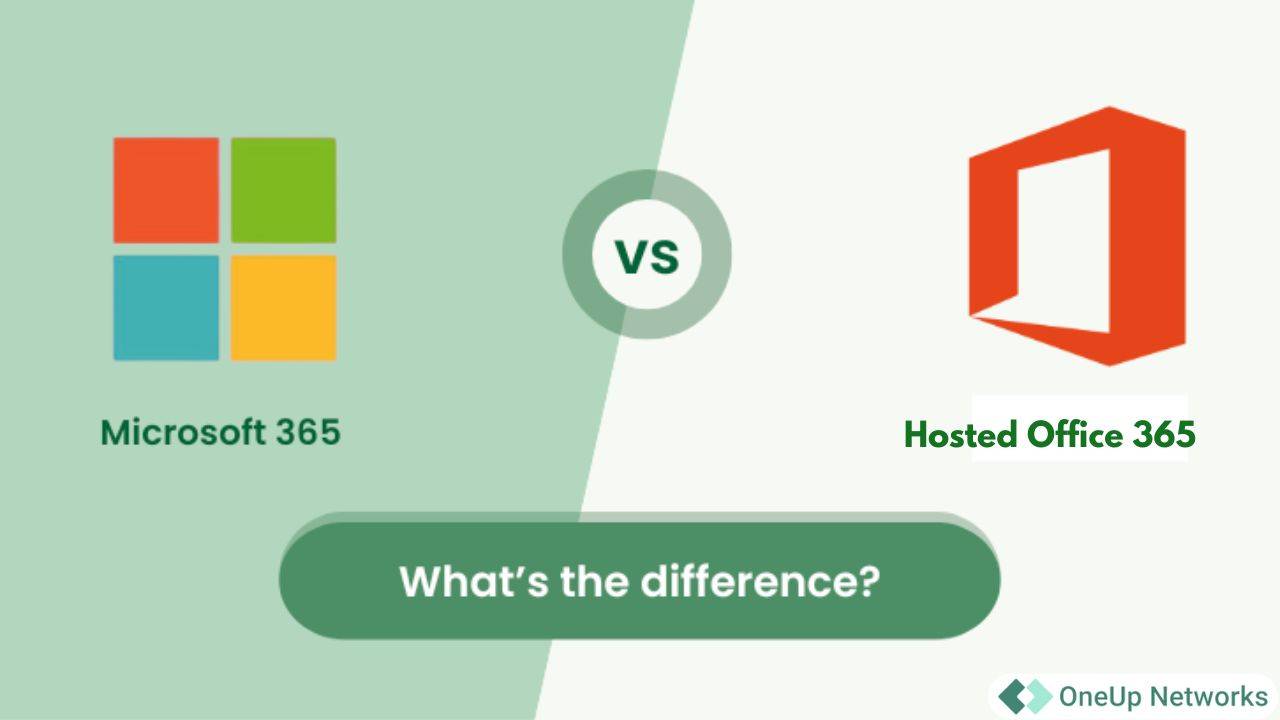
Accounting firms operate under constraints that most businesses never face. Client data is highly sensitive, regulatory expectations are strict, and tax and audit deadlines are non-negotiable. These pressures make reliability and control more than IT concerns—and that’s why the discussion around Hosted Office 365 vs Microsoft 365 is becoming increasingly relevant for CPA firms. While Microsoft 365 is now standard across the profession, how it is deployed matters as much as the tools themselves. Many firms are reassessing whether Microsoft’s standard multi-tenant cloud is sufficient, or whether Office 365 on cloud servers (Hosted O365) provides stronger operational control, performance consistency, and compliance alignment. The goal of this article is to help accounting leaders evaluate that choice clearly, without hype, fear, or vendor bias.
What Is Office 365 on Cloud Servers?
Office 365 on cloud servers—often called Hosted Office 365 or Hosted O365—is a deployment model where your firm’s Office 365 tenant is delivered through dedicated or tightly segmented cloud infrastructure managed by a specialized provider. The core applications do not change: Outlook, Word, Excel, Teams, OneDrive, and SharePoint are still licensed and updated by Microsoft.
What changes is where and how those applications run and are accessed. Instead of relying only on Microsoft’s default internet endpoints, users connect through a hosted environment—typically virtual desktops or published apps—where Office Hosted O365 sits alongside tax, audit, and accounting systems in the same controlled cloud. This enables unified policies, centralized updates, and standardized access paths for your entire practice.
A Simple Analogy
Think of Microsoft’s standard cloud as a large, well‑run shared office building. You have your own suite number, but you share elevators, power, and many rules with everyone else. Hosted Office 365 is like leasing a private, managed floor in that same building.
- You still use the same productivity tools.
- But you gain clearly defined boundaries, custom security rules, and predictable operating conditions.
- Dedicated support staff focus on your floor, not the entire building.
For accounting firms, that extra layer of isolation and management often aligns more closely with how partners and auditors think about risk and control.
Microsoft’s Standard Cloud Explained
Microsoft delivers Office 365 as a multi‑tenant Software‑as‑a‑Service (SaaS) platform. Each customer is a separate tenant, with data logically isolated but physically co‑located on shared infrastructure in Microsoft‑managed data centers.
Key characteristics include:
- Shared infrastructure with standardized controls
- Global scale, redundancy, and continuous availability investments
- Strong baseline security, including encryption and identity services
- Regular independent audits such as SOC 2 Type II for core services
For many businesses—including a large number of accounting firms—this model is sufficient when configured and managed properly. However, the same multi‑tenant design that delivers scale also introduces constraints around customization, fine‑grained control of infrastructure, and how much direct evidence you can show auditors about environment‑level safeguards.
Hosted O365 vs Microsoft Standard Cloud
The real question is not “Is Office 365 secure?” but rather “Which deployment model gives our firm the right level of control, evidence, and performance for how we work?” Below is a structured comparison for accounting and CPA use cases.
Hosted Office 365 vs Microsoft 365 Standard Cloud for Accounting Firms
| Dimension | Microsoft Standard Cloud (Native M365) | Hosted Office 365 on Cloud Servers |
|---|---|---|
| Infrastructure | Shared, multi‑tenant environment; infrastructure design and changes are controlled by Microsoft. | Dedicated or tightly segmented infrastructure in a provider’s cloud, tuned for accounting workloads. |
| Data control | Logical tenant isolation; data location options exist but stay within Microsoft’s global architecture. | Additional isolation at the VM and network layers; providers can enforce stricter segmentation per firm. |
| Security & compliance | Strong baseline: encryption, identity, and audited controls for the platform; firm remains responsible for configuration and endpoints. | Environments designed to support IRS, SOC, FTC Safeguards, and similar expectations, with accounting‑specific hardening, logging, and access controls. |
| Performance consistency | Overall scalable, but end‑user experience depends heavily on local networks, endpoints, and internet quality. | Reserved compute and storage; Office apps co‑located with tax and accounting systems for more stable performance, especially during peak season. |
| Customization | Mainly policy‑level configuration within Microsoft’s guardrails; infrastructure is largely standardized. | Ability to tailor VM sizing, storage tiers, backup design, session settings, and integration with other hosted systems. |
| Support model | Platform‑wide Microsoft support plus whatever the firm’s IT team or MSP provides. | Provider‑managed, firm‑specific support with defined SLAs, maintenance windows, and escalation paths. |
| Cost predictability | Subscription licensing; additional tools, storage, and security add-ons can create variability. | Bundled, predictable monthly pricing that typically includes hosting, backups, monitoring, and support, with a hosting premium. |
The difference is not about getting more “features” inside Word or Excel. It is about operational control, risk posture, and who is accountable when something fails at the worst possible moment.
Why Accounting Firms Often Prefer Hosted O365
Many accounting firms choose Office 365 on cloud servers not because Microsoft’s native platform is inadequate, but because their regulatory, risk, and operational requirements extend beyond basic availability. As firms grow, take on higher-risk clients, and operate under tighter scrutiny, they often look for environments that offer clearer control boundaries, stronger evidence for compliance, and more predictable performance during peak periods. Hosted Office 365 aligns with these priorities by combining Microsoft’s core services with a more controlled and accountable operating model.
Regulatory and Compliance Alignment
Accounting firms must demonstrate reasonable safeguards for client data—not just in policy documents, but in actual systems and processes. This often involves alignment with:
- IRS and tax authority expectations on safeguarding taxpayer information
- SOC‑aligned control frameworks and client vendor‑risk questionnaires
- FTC Safeguards, GDPR, or HIPAA where applicable, depending on client mix
Hosted Office 365 does not “make you compliant,” but it can make compliance easier to evidence. Providers typically design environments with:
- Documented technical and organizational controls
- Defined data residency and data‑handling procedures
- Auditable access boundaries and event logging
That evidence is increasingly important during peer reviews, client due diligence, and incident investigations.
Data Isolation and Security Posture
Microsoft already provides logical tenant isolation within its multi‑tenant architecture. Some firms, however, prefer an additional isolation layer for high‑risk workloads such as tax returns, payroll data, and audit workpapers.
Hosted environments often offer:
- Segmented networks around accounting and tax applications
- Hardened remote access gateways (e.g., RDS/Citrix) for staff and contractors
- Centralized logging and monitoring tuned for financial-data risks
- Provider‑managed patching and baseline hardening of servers and virtual desktops
For risk‑aware firms, this is viewed less as a convenience and more as a way to narrow the attack surface and gain clearer visibility.
Performance During Busy Season
Tax season and audit peaks expose weak infrastructure quickly. Common complaints include:
- Slow Excel calculations on complex workbooks
- Lag when opening large client files or shared workpapers
- Video meetings competing with tax software and file sync
- Remote staff experiencing inconsistent performance from home networks
Hosted Office 365 environments can reserve CPU, memory, and storage performance for your firm, placing Office alongside tax and accounting systems in the same cloud. This reduces reliance on end‑user hardware and variable home internet quality, which is crucial when workloads spike and deadlines cannot move.
Operational Control and Accountability
When deadlines matter, accountability matters. Hosted environments usually include:
- Defined SLAs that reflect busy‑season realities
- Scheduled change windows aligned with filing calendars
- Clear escalation paths for incidents and performance issues
- A named provider responsible for day‑to‑day operations
Instead of being one of millions of tenants on a global platform, your firm has a relationship and contract with an entity whose business is to support regulated professional services environments.
Where Hosted Office 365 Delivers the Most Value for Accounting Firms
Certain accounting use cases highlight where Hosted O365 can be materially different from standard Microsoft 365.
Busy-Season Workloads
During tax season or key audit periods, staff counts and activity spike. Centralized hosted desktops keep the heavy lifting in the data center:
- New seasonal staff can be onboarded into the same controlled environment.
- Performance is governed by server‑side resources, not scattered PCs.
- Partners can focus on workflow throughput rather than troubleshooting local machines.
Large Excel and Document Files
Audit and advisory teams rely on complex Excel models, pivot-heavy workbooks, and large PDF sets. Hosting Office near the data reduces latency:
- File access is over high‑speed internal links, not long WAN trips.
- Re‑calculation and macro execution leverage server‑class hardware.
- Collaboration is smoother when multiple users work on shared files.
Accounting Software Integration
When Hosted O365 lives in the same hosted environment as your tax, practice management, and document management systems, integrations are easier to manage and more consistent:
- Mail merges, exports, and shared links stay within one controlled network.
- Authentication and access can be unified under a single identity layer.
- Vendor coordination is simplified when one provider hosts most core platforms.
Remote and Hybrid CPA Teams
Hosted Office 365 supports a model where:
- Every user connects into a standardized, hardened environment.
- Sensitive data remains in the hosted environment instead of spreading to personal laptops.
- Updates, security policies, and access controls are applied centrally.
This is particularly important for firms with a mix of in‑office, remote, and seasonal staff.
Limitations of Microsoft’s Standard Cloud
Microsoft’s standard cloud is not flawed or “unsafe.” It simply reflects the trade‑offs of a global multi‑tenant SaaS platform.
Common limitations for accounting firms
- Limited customization: You can’t control how Microsoft’s underlying servers and storage are built. Most changes are limited to settings and policies.
- Basic backup options: Microsoft retention tools help, but they aren’t designed for firm-specific backup and restore needs without extra tools.
- Performance depends on users: Speed and stability still rely on staff laptops, Wi-Fi, and internet quality—especially for remote teams.
- More responsibility on your firm/MSP: Microsoft runs the platform, but your firm (or MSP) must manage security setup, devices, monitoring, and response.
Many small firms still operate successfully and securely within these boundaries. The question is whether this model continues to fit as the firm grows, adds offices, or faces more demanding clients and regulators.
Benefits of Hosted Office 365
Hosted Office 365 attempts to close those gaps by adding an accounting-aware operational layer around Microsoft’s productivity stack.
Key benefits of Hosted O365:
- Consistent performance: Reserved CPU, RAM, and storage reduce slowdowns during busy season.
- Better backups: Backup and retention can be tailored for tax and audit records.
- Clear disaster recovery: Defined recovery targets (RTO/RPO) and optional cross-site protection.
- Predictable pricing: Bundled monthly costs for hosting, monitoring, and support.
- CPA-focused support: Teams familiar with accounting workflows resolve issues faster.
These advantages matter most when workloads are high, regulatory scrutiny is intense, and internal IT capacity is limited.
Common Tools and Add-Ons Used with Office 365 on cloud servers
Whether you remain on Hosted Office 365 vs Microsoft 365, your security and compliance posture will depend heavily on supporting controls and tools.
Common building blocks include:
- Third‑party Microsoft 365 backup: Provides point‑in‑time restore for Exchange, SharePoint, OneDrive, and Teams beyond native retention.
- Multi-factor authentication and conditional access: Enforces additional verification steps and risk‑based access rules to mitigate credential theft and risky sign‑in behavior.
- Security monitoring and alerting: Centralizes logs and flags unusual activities such as anomalous sign‑ins, data downloads, or permission changes.
- Secure client file sharing: Uses portals or managed sharing services that integrate with Office 365 while keeping client uploads and shared documents inside a controlled environment.
Hosted environments often bake these into a standard architecture, which makes consistent deployment and maintenance easier for firms that do not want to assemble and integrate tools themselves.
FAQs on Hosted Office 365 vs Microsoft 365
Often yes—if identity, devices, monitoring, and configuration are managed properly under the shared-responsibility model.
Operational control, evidence for compliance, performance consistency, and centralized management—especially in busy season.
Not always. It improves consistency by reducing dependence on endpoint hardware and home networks, but results depend on design and provider quality.
Mid-sized or growing firms, multi-office teams, firms with heavy Excel/workpaper workloads, and those facing strict vendor-risk or regulatory scrutiny.
Final Verdict: Which Model Makes Sense?
Hosted Office 365 is best suited to firms that:
- Operate at scale or across multiple offices
- Have demanding audit, regulatory, or vendor‑risk requirements
- Experience recurring performance or support issues during busy seasons
- Want a clearly accountable provider for day‑to‑day operations and incidents
Microsoft’s standard cloud remains a strong option for firms that:
- Are smaller or less complex in structure
- Have straightforward workflows and integrations
- Invest consistently in configuration, endpoint security, and monitoring
- Are comfortable managing shared‑responsibility obligations with internal IT or an MSP
For many practices, the most pragmatic approach is incremental: harden and optimize your current Microsoft 365 environment first, then evaluate Hosted Office 365 when growth, client expectations, or regulatory pressure highlight gaps that a hosted model can realistically close.
Improve Microsoft 365 Performance and Control with Hosted O365
If your firm experiences Outlook lag, unreliable sync, slow Excel performance, or inconsistent results for remote staff during busy season, Hosted Office 365 can help deliver a more stable and controlled environment. By running Microsoft 365 through a dedicated hosted desktop (Citrix/RDS/VDI), firms often gain better performance consistency, stronger security boundaries, and clearer operational accountability—without changing the tools your team already uses.
- Book a Demo – See Hosted Office 365 running in real CPA workflows (Outlook, Excel, Teams).
- Start a Free Trial – Test Hosted O365 with your firm’s users and workloads, no obligation.
- Request a Quote – Get a tailored recommendation based on mailbox sizes, team size, and busy-season needs.
You May Also Like These Articles: