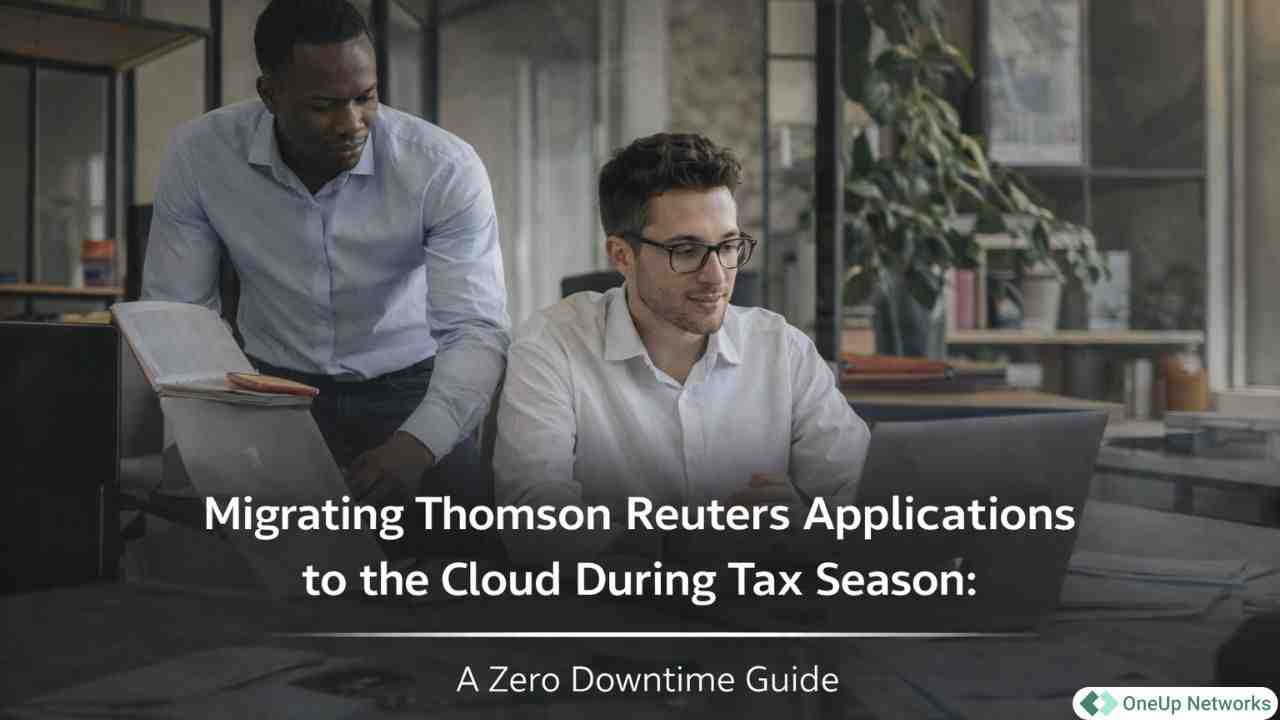
Most firms delay cloud migration until after tax season. It feels safer. Systems are stable, workloads are predictable, and risk seems lower. But in practice, this delay often creates a different kind of risk—firms remain tied to systems that cannot scale, recover, or support remote access when demand peaks.
Migration during tax season is not inherently risky. Unstructured migration is. Downtime doesn’t come from moving systems—it comes from moving them without control. Migration speed creates risk. Migration control prevents it. The real question is not whether you can migrate during tax season. It’s whether you can do it without interrupting work already in progress.
Where Migration Fails Under Real Conditions
Most failures don’t happen because of technical limitations—they happen because of timing, assumptions, and incomplete planning. During tax season, systems are constantly active. Teams prepare returns, review filings, sync documents, and generate reports in real time. When firms attempt a system move without accounting for this activity, small gaps quickly escalate into operational disruption.
Common failure patterns include:
- Moving live systems without workload awareness
- Interrupting active tax return processing
- Incomplete synchronization between environments
- Lack of rollback strategy if issues occur
- No parallel system available for validation
System transitions do not fail because of complexity—they fail because firms treat active workloads like static data.
Why Thomson Reuters Applications Require Controlled Migration
Thomson Reuters applications such as UltraTax CS, Accounting CS, and Practice CS operate as interconnected systems rather than standalone tools. These platforms rely on shared databases, licensing services, document management systems, and multi-user session consistency. Because of this, even minor inconsistencies during a cloud shift can affect the entire workflow.
Unlike basic file transfers, these systems cannot tolerate partial movement. A successful transition must preserve data integrity, maintain session continuity, and ensure that all dependencies function correctly throughout the process. This is not data transfer—it is environment replication under load.
What “Zero Downtime” Actually Means
Zero downtime means users continue working without interruption while systems transition in the background.
In a properly executed transition:
- Users continue working without disruption
- Data remains synchronized between systems
- Final cutover does not break active sessions
- Work-in-progress remains intact
Zero downtime is not the absence of change—it is the absence of disruption.
The 3 Phases of Zero Downtime Migration
Firms that achieve seamless transitions treat this as a structured process rather than a one-time event.
- Environment Preparation : Teams build the cloud setup, configure applications, and validate infrastructure readiness before any movement begins.
- Live Synchronization : Data replicates continuously between systems, ensuring both environments stay aligned while users continue working.
- Controlled Cutover : Teams shift users only after validation is complete, ensuring no interruption to active work.
Most failures occur when firms skip synchronization and attempt direct cutover without alignment.
Where CPA Firms Commonly Get It Wrong
Even well-prepared firms encounter issues when they treat transition as a technical task instead of an operational process.
Typical mistakes include:
- Treating migration as a one-time event
- Ignoring active user sessions
- Overlooking application dependencies
- Failing to communicate transition plans
- Assuming backups provide rollback capability
These issues rarely appear during planning—but they surface immediately during execution.
Example: Migration During Peak Filing Week
A CPA firm attempted to move its UltraTax CS system during peak filing week. The team transferred data overnight but did not account for active database dependencies and user sessions.
The next morning, staff encountered login failures, missing data, and system instability. Active tax work became inconsistent, inaccessible, and delayed during critical deadlines. Work stopped while IT resolved inconsistencies.
In contrast, another firm used a phased approach. Both systems ran in parallel, data synchronized continuously, and validation occurred before cutover. When the transition happened, users experienced no disruption. The difference wasn’t timing—it was control.
A Practical Zero Downtime Migration Checklist
A thomson reuters hosting migration is defined by stability—not speed.
- Build and validate a parallel cloud system
- Maintain continuous data synchronization
- Map all application dependencies
- Plan transition around active workloads
- Test system performance before cutover
- Prepare rollback and contingency strategies
- Communicate clearly with all users
Quick Migration Readiness Test
If you cannot answer “yes” to these questions, your transition may introduce risk:
- Can both systems run simultaneously before cutover?
- Can data synchronize continuously without interruption?
- Can users continue working during the transition?
If not, your plan may be complete—but not operationally safe.
What Happens When Migration Fails
When transitions fail during tax season, the impact is immediate and operational.
- Active tax work becomes inconsistent or inaccessible
- Staff lose access to critical systems
- Filing timelines slip under pressure
- Operational stress increases across teams
The issue is not the transition itself—it is disruption during critical workflows.
How OneUp Networks Supports Zero Downtime Migration
OneUp Networks helps CPA firms execute controlled transitions without interrupting operations.
- Migration planning aligned with active workloads
- Parallel cloud system deployment
- Continuous data synchronization
- Controlled cutover execution
The goal is not just transition—it is uninterrupted operations.
Frequently Asked Questions (FAQs)
Yes— Thomson Reuters hosting migration is fine when the transition is structured and controlled. Risk comes from execution, not timing.
Not when firms use parallel systems and controlled cutover strategies.
It depends on system size and complexity, but continuity matters more than speed.
Not at all. It just needs an experienced hosting provider like OneUp Networks who has successfully completed more than 5000 migrations.
Interrupting active work due to incomplete synchronization or poor planning.
Conclusion
Migrating Thomson Reuters applications to the cloud is not simply a technical upgrade—it is an operational transition that must be handled with precision. During tax season, when systems are active and workloads are high, even small disruptions can affect productivity and deadlines. A well-structured approach to Thomson Reuters cloud migration ensures that data remains consistent, users stay connected, and workflows continue without interruption.
In practice, zero downtime migration is not achieved through speed, but through control. Firms that plan migration around real workloads, maintain synchronized environments, and validate systems before cutover are able to move without disrupting ongoing work. The goal is not just to complete migration, but to ensure that operations remain stable throughout the process.
Want to See How Thomson Reuters Cloud Migration Works Without Disrupting Active Work?
If you’re planning to move your tax and accounting applications to the cloud, OneUp Networks offers guided walkthroughs and migration planning to help you understand how data stays synchronized, users remain connected, and workflows continue without interruption with Thomson Reuters hosting migration.
- Book a Demo – See Thomson Reuters applications running in a parallel cloud environment during live migration scenarios.
- Start a Free Trial – Experience system access, performance, and data continuity in a hosted setup with no obligation.
- Request a Quote – Receive a tailored migration and hosting plan based on your current environment, users, and workload.
You May Also Like These Articles:
- Thomson Reuters Fixed Assets CS Hosting
- The Ultimate Guide to QuickBooks Hosting
- Step-by-Step Migration: Moving from Local CCH ProSystem fx to Cloud Hosting
- Backup & Disaster Recovery for CPA Firms: RPO,RTO & Ransomware Protection Guide (2026)
- Tax Season Survival Guide For Accountants and CPAs with QuickBooks Hosting